Friday, 25 October 2013

Revolution!

I need to jump on this whilst it's still current, because I have a habit of writing about stuff about a week after it's passed.

YouTube is currently trending with an interview conducted by BBC Newsnight's Jeremy Paxman with Russell Brand, who alongside being an actor and comedian spent the last week editing the New Statesman, a political magazine.  The interview would have been fairly basic fare (although likely still receive a lot of applause from Brand's fans) had it not been for the revelation that Russell Brand has never participated in a general election.  Paxman picks up on this and seems to express exasperation at Brand's reluctance to utilise his vote, tying it into his dominant query about why Brand believes he can talk about politics with such authority.

Before I launch into this, I do want to quickly say that Brand does make good points in his "flicking-frenetically-through-a-thesaurus" manner, and I'll come back to them later, but first this:

Within hours of the interview going live, I saw about ten of my friends on Facebook sharing the video accompanied with some comment about how Paxman's an arse and Brand's a hero, which annoyed me thoroughly.  Why is it that even after over twenty years, people still do not understand Jeremy Paxman?!

This is what he does, and it's the sign generally of a journalist doing his job, and also for me highlights the hypocrisy of both tails of the political spectrum (which Brand rightly admonishes in the interview) that it's fine to rail on somebody at the opposite end, but either unpatriotic or bourgeois to do the same to somebody on your end.

Admittedly, Paxman probably didn't need to call Brand "trivial" or "facetious", but that's just the way he is.  Everybody criticising him for his brashness seem to not understand his particular type of journalism: in several interviews easily accessibly on YouTube his style tends to be to try and get an emotional reaction out of his subjects, and in the case of Brand, he did actually succeed.  I doubt somehow that Paxman walked away from the interview thinking he'd lost - interviews are not meant to be about victories between the interviewer and the interviewee; the only victor or loser is the truth - he walked away from the interview thinking that he'd successfully done his job by evoking an emotionally truthful reaction from Russell Brand.  The job of journalism is not to pander to a particular point of view: it's to hold every perspective accountable.

Plus, Brand seems to be more ready to deride his position than Paxman.  It's Russell that suggests his view holds less weight than others due to his standing as a "comedian" or "actor": Paxman is merely asking why we should "take [him] seriously, when [he's] so unspecific".

Now then, as far as Brand's views are concerned, I'll admit I'm tempted to actually buy the current issue of the New Statesman - mostly to read about the views of the other people who may actually have a coherent theory for an alternative political constitution.  Just because Brand doesn't have that, doesn't mean we should idly dismiss him, so I think it's a good thing that he has taken on the responsibility of editing a platform for such discussion because at least this does give him some legitimacy: like he says, he's not apathetic to the issue, but rather exhausted with it, and that is perfectly valid.  I feel the same way.

Voting may not further legitimise my ability to speak on political issues, but it's still important nevertheless.  Brand is frankly being irresponsible by telling the youth - the people most likely to vote for alternative parties - not to do so, and instead wage civil unrest to topple the current political class.  If that demographic, as a collective, stopped going to the polling booths then we will see a rise in conservatism in the House of Commons: with truly progressive parties like the Greens or the handful of non-partisan MPs losing seats (along with the loss of faith in the Liberal Democrats, which I think is unfair and instead should be directed at Nick Clegg above the rest), then we'll start to see groups like UKIP and the BNP gain momentum, and the Conservatives will push further to the right to save their backbenchers.

Revolution may sound grand and glorious, but history has shown time and time again that revolutionaries invariably make terrible politicians.  If it isn't hijacked by the powerful who turn it into a system that favours their position, it instead corrupts the leaders whilst economically devastating the masses.  Real change, as history has also shown, usually comes with gradual adjustments within the existing framework: from the rise of the Senate's power over the executive magistrates in Ancient Rome; to the abolition of slavery in Britain, a battle hard-won in a Parliament that still stands today; to the suffragettes, who still had to rely on men to vote in favour of women's rights; and so on.

If you want change, then start a revolution, but I guarantee you it will not last very long because new governments do not require a pre-existing notion of sovereignty and so have free reign to create their own that end up serving similar purposes to the system they overthrew.  If you want change with longevity, then it can come, unfortunately it just happens slowly.

Voting is only worthless if it is not used at all, and politicians that seek to undermine popular consensus rely on the complicity that Brand perpetuates, which can come either in the form of a person choosing not to cast a vote or by blithely accepting the situation and voting for the least controversial candidates.  I, unfortunately, do not have the benefit of the platform that Brand stands upon, but I urge you: listen to him, consider his point of view, understand what he is saying, but I implore you, whilst making certain it is for progressive movements...


Vote.


Friday, 4 October 2013

Journalism: A Morality Tale

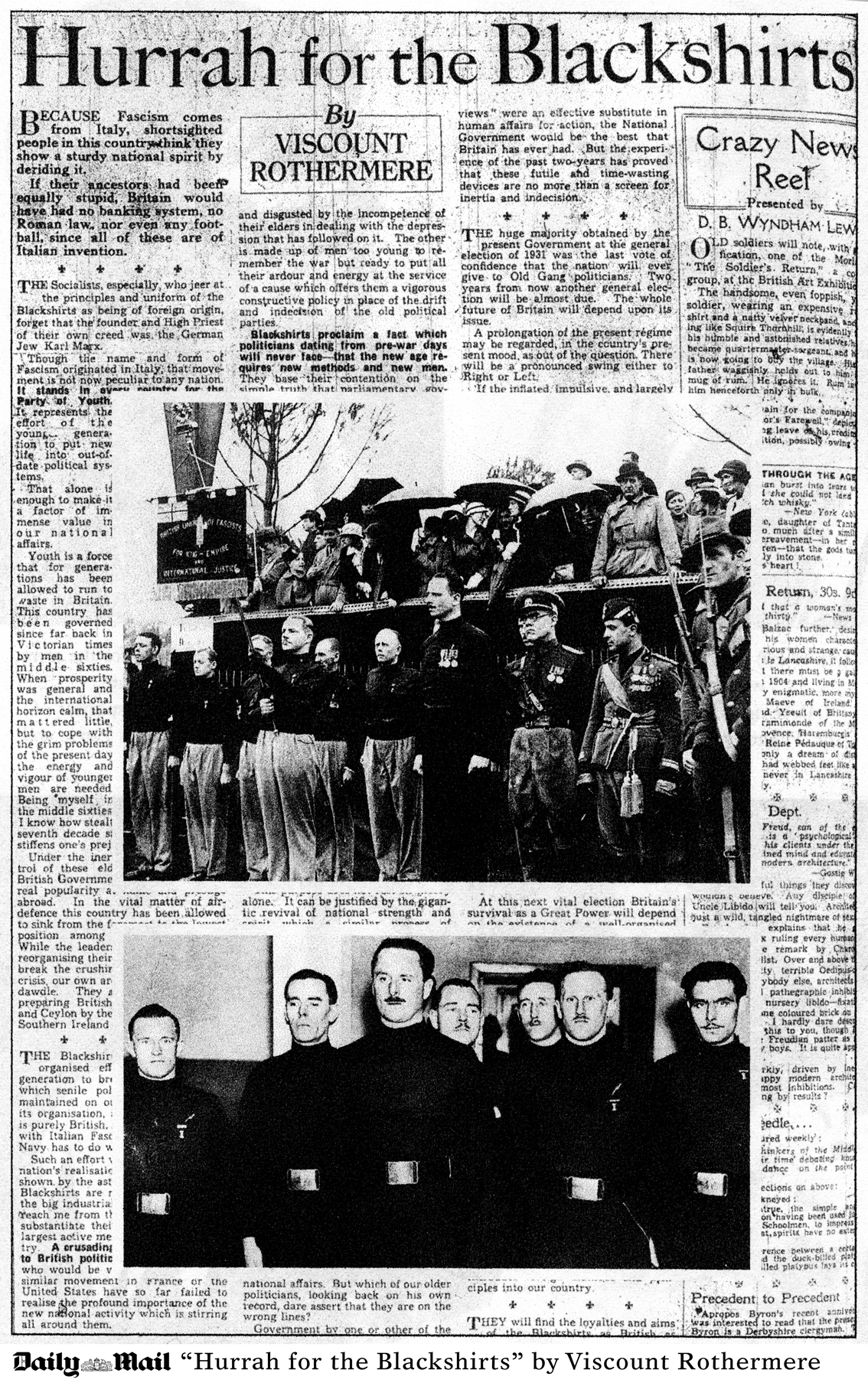
In recent days, the newspaper that we love to hate - the Daily Mail - published an article under the heading "news" by one Geoffrey Levy stating in its title: "The Man Who Hated Britain", followed by the typical rambling continuation of a headline that tries to sum up the entire article in one sentence.  This is popular with a few of this country's less-than-reputable papers.

The article attacked the father of our current Leader of the Opposition, Ed Miliband, one Ralph Miliband.  Ralph was a Jewish immigrant that arrived in this country in 1940, seeking asylum from the Nazi atrocities being committed on people of a particular religious persuasion on the continent.  Whilst his gratitude for the saving grace of the United Kingdom is surely undebatable - I do not, after all, want to contradict the people that knew him best that have said as much when I have no evidence to the contrary - he did write a journal that, at the age of 17, included some critiques of this country.  Some of which was probably justified, but a little sensitive in the historical context (we were fighting a war, and patriotism tends to vilify balanced discussion).

The Daily Mail decided, therefore, to brand Ralph Miliband as a "man who hated Britain", and online (now removed) included a photo of the man's gravestone with the caption: "grave socialist".  Whilst the Daily Mail have now apologised for the use of the photo, they still stand by their analysis of Ralph Miliband as a "man who hated Britain".

Whilst most critics of the piece are jumping on the idea that the paper shouldn't have written the story in the first place, I disagree.  Any journalist can write about any subject they want, and that as far as I'm concerned is the definition of free press.  It is simply the manner of the report.  For example, I could say:

"The Daily Mail is a disgusting, horrible, sickening blight on the fabric of decent society".

Now, I have license to say this because I'm not the news.  As a blogger, I barely scratch the edges of being a secondary source of information, and I do not investigate nor do I report news in the first instance.  I get my information from the places that do, and do so objectively and with no inherent bias in their literature.  Sure, even The Independent can demonstrate some liberal bias in their articles, but I'm either smart enough to see it and therefore avoid it or verify any evidence with a correlative article somewhere else.

However, the population doesn't do this and will tend to rely on one outlet to gain information as well as formulate an opinion on it, and the Daily Mail ignores its responsibility as a supposed newspaper to take advantage of this.  Journalism is an objective medium: it can analyse, but its purpose is not to comment on the news in such terms or develop opinions.  There needs to be a distinction between reporting the news - where facts supported by evidence are paramount and exclusive - and opinion, because the thick line that exists between objective fact-handling and subjective commentary will erode until opinion starts to get taken as fact.  The Daily Mail desperately needs to rebrand itself as a "viewspaper" (to quote Tony Blair), so that its readers do not mistake its bias for balance.

My issue with the Daily Mail therefore is not that they reported on the story, but that they gave an opinion to open it.

This whole issue of course reignited the debate on press regulation.  I believe in a free press, I do, but that does not mean it shouldn't come with a few rules.  There is a difference between the dictation of what can be reported and the regulation of how it should be reported, and so long as the latter sticks to the notion of "objective = good, subjective = bad" then I don't really see the problem.  Any organisation or person wishing to report on the news directly should stick to delivering the facts, whilst any organisation or person wishing to comment on the news should not be involved in the former.

I do find it hilariously ironic that Levy's headline was, in it's entirety:

"The man who hated Britain: Red Ed's pledge to bring back socialism is a homage to his Marxist father.  So what did Miliband Snr really believe in?  The answer should disturb everyone who loves this country."

It's ironic considering the Daily Mail continually finds ways to attack this country: not just its government but its culture and its society.  I know that a lot of people have brought up the newspaper's historic ties to Nazi Germany, which they have dismissed as irrelevant and 70 years in the past.  Right.  Just like the entire cornerstone of their direct attack on the late Ralph Miliband and the indirect one on his son is predicated on historic writings.  If this is meant to somehow weaken Ed, then they shoot themselves in the foot by saying "the iniquities of the father shouldn't be visited on the son", although that is quickly followed up by a "however..."

As for "Red Ed's" (again, not a title befitting a "news"paper) remarks on socialism: he isn't preparing the groundwork for his father's legacy.  He's just doing what a lot of Labour backbenchers have been screaming for since 1994.


The Daily Mail article:
BBC Newsnight video of Jon Steafel "apologising" for the gravestone:
BBC article including the Mail's statement about "iniquities of the father..."

And just for some colour, the Daily Mail as it was in the 1940s:

Wednesday, 28 August 2013

Are You Syria-ous?

Please forgive me the title.

The United Kingdom Government is drafting a resolution - that by the time most read this, will already have been submitted - for intervention in Syria, following the use of chemical weapons in the country.  There is still some confusion about which of the two sides in the conflict used the gas, although most evidence (according to US intelligence) points towards the culprit being the Syrian government.

So, here we are again.  Standing on the precipice of yet another war in the Middle East, and not because of the standard upon which we should judge international combative measures but because of the use of a slightly different kind of bomb.  I do not wish to suggest that we should not condemn the use of biological or chemical weapons, but what I will say - as a very quick point that does really deserve greater attention - is that we should not be condoning the use of even conventional weapons designed to kill large groups of people.  Plenty of civilians have already died in Syria as a result of regular explosives and firepower.  It is also hypocritical of any nation carrying nuclear weapons to outlaw weaponised gases, when they hold a bomb capable of inflicting far more damage and whose effects lasts a much longer period of time with very few treatment options.

Back on the main point, the question is: should we intervene in Syria?  Most of the top brass in the UK, USA and even the United Nations agree that we are now beyond asking such questions now that the style of warfare has changed, but I don't agree, and here's why: we are talking about getting involved in a civil conflict.  This is a war that has not yet crossed borders, and so whilst should garner the attention of the international community, should not provoke them into involvement.

If we take the chemical attack into consideration, a Reuters poll four days ago suggested that just 25% of the US population would support military intervention in Syria.  In the UK, a YouGov poll placed that figure at about the same (in regards to using long-range ballistics against the country).  I should point out of course, something that the mainstream media may not do, that you have to look very carefully at the wording of those polls.

Generally though, there is only a smattering of support for international involvement in the country, and I agree.  The conflict in Syria - whilst it has external support from Israel/Lebanon/Iran etc. - is still largely contained within the country itself, and is a civil war.  Over the course of the past year or so, NATO has been considering several options, all of which should not be entertained largely because of precedence.

Sending arms to Syrian rebels?  I direct you to Afghanistan, 1987.  The Mujahideen and the forerunner to Al Qaeda were very grateful.

Military intervention?  Afghanistan again, 2001.  And Iraq.  Somalia.

Despite the apparent altruism that factors into the willingness of Western nations to get involved in a country writhing in turmoil where there are few natural resources - least of all oil - to exploit, this is not a fight that belongs to us.  Syria is a political black hole, but it does not mean that we should not aim to rescue innocent stragglers within it.

If there is one thing that the international community can do, it's provide an exit for those Syrians that have no interest in being involved in the conflict.  Utilising our relationship with Turkey, Cyprus and position in Iraq the United Nations Security Council should seek only to assist in the asylum of uninterested civilians, and not get anywhere near the fighting itself.  There is only one circumstance where military intervention could be considered legitimate in my view, and that is if the United Nations itself was able to mobilise a force flying under its own banner to put an end to the conflict based on a declaration pertaining to human rights and violations of international law, not popular sentiment or the lobbying of interested parties (including governments).

Unfortunately, the UN does not possess such a force, and so we are in a position that whilst awkward and uncomfortable is fairly clear cut.  Until such time that bombs start falling or bullets fly across international boundaries, this is a civil war and a conflict that should not be led in particular directions by external forces.  Especially when neither side can claim to have the moral high-ground based on the outside support they do have: the Syrian rebels also have the regional support of Al Qaeda and Hamas.

Hmm.  Slippery slope, meet pot and kettle.

The resolution:
http://www.bbc.co.uk/news/world-middle-east-23864124
The Reuters poll:
http://www.reuters.com/article/2013/08/25/us-syria-crisis-usa-poll-idUSBRE97O00E20130825
A YouGov poll from February:
http://yougov.co.uk/news/2012/02/08/foreign-intervention-syria/

I will warn you about the use of fuzzy flowcharts, especially ones that need updating every couple of months, but still handy:
http://www.washingtonpost.com/blogs/worldviews/files/2013/08/BSm0bOBCYAAAph6.jpg

Saturday, 10 August 2013

Cold in Sochi, Hot in Moscow

Who here thinks that we should boycott the Winter Olympics being held in Russia in 2014?  Everyone?  Huzzah!

Yes, I know my immediate reaction is to go against the tide, but how else can I possibly alienate myself and therefore feel unique?

There is a growing sentiment now around the world - felt very prominently here in the UK at the moment - that we should either ban or boycott the Winter Olympics that are due to be held in Sochi in 2014.  Prolific broadcaster Stephen Fry recently got into a bit of a tiff with Prime Minister David Cameron about the issue, where Fry is essentially petitioning for the IOC to take the Olympics away from Russia to make a point to its government and specifically President Vladimir Putin.  That point being:

"Dear Mr Putin, would you mind awfully leaving the lovely homosexuals alone?"

As I'm sure most are aware, Russia passed a law in June forbidding anybody from passing information about homosexuality to persons under the age of 18, showing not just a blithe disregard for the science behind "being gay" but also ignorance of the gay community in general.  It makes it a lot easier to victimise a group of people if you can make outrageous claims of brainwashing and the spreading of propaganda.

In response the IOC has actually decided to take into consideration the anti-gay law in a decision making process to continue with the Sochi Olympics.  CNN reported a couple of days ago that the IOC have decided not to withdraw the games from the city, based on a definitive statement by one of its members:

"I don't feel there is a problem whatsoever.  Russia has their laws.  Each athlete can have their own private life, so we won't call upon people about this and that.  This law has to be respected.  We are here for the World Championships and have no problem whatsoever and I'm not worried at all."
- Lamine Diack, IAAF President

 Just for some perspective, this is what the IOC President Jacques Rogge had to say on the matter:

"The Olympic charter is clear.  A sport is a human right and it should be available to all, regardless of race, sex or sexual orientation.  As far as the freedom of expression is concerned, of course, this is something that is important."

Very diplomatic.  It seems the IOC have managed to confirm a key factor in this whole debate that has been ultimately misconstrued: whilst it is clear that the Russian Government is homophobic, the law they have passed is not actually outlawing homosexuality, just essentially condemning it.  I'm not saying that's a good thing at all, but I'm trying to build up to the next point.

Can we stop making the comparisons to Nazi Germany?  Yes, Russia is starting to show the hallmarks of fascism in its early days, but I do not think Sochi 2014 can be adequately compared to Berlin 1936.  For a start, the crux of the point - Jesse Owens, the African-American who won a gold medal - is ludicrous.  According to Owens himself, Hitler's treatment of him at the games (who shook his hand when he won) paled in comparison to the treatment he received from his own government when he returned home an Olympian.  Those that are saying that we should hope a gay athlete wins an event to illustrate a point to Mr Putin based on this argument are wallies: the Berlin Games, and Owens' win, took place in 1936.  Three years later World War II and the subsequent, unrelenting extermination of anybody who wasn't white, hetero or Christian began.  I don't think Jesse Owens had much of an impact on Mr Hitler.

If we as a human race outside of Russia can act in unison, then we essentially have three options.  Accept the Sochi Olympics and get in the scrum for tickets; boycott the games and let down the teams sent there to compete; or take the games away from Russia and have them somewhere else.

I don't agree with Number 2, for hopefully obvious reasons, and I think there's been some miscommunication where the media are reporting "have-the-games-elsewhere" and "boycott" as the same thing.  They're not the same thing.  Boycott the games and you ignore their existence, potentially endangering the gay athletes sent there due to the lack of interested media coverage.  Move them somewhere else is the line I would be on.

Unfortunately, even this option seems out of the question now, and I do fear that the IOC are pressing ahead not because of assurances from the Kremlin but because it's now too late.  Whilst it would be nice to move the Olympics to some other country that could really use it and aren't stomping on human rights (although, good luck finding that country) it's probably not feasible at such a late stage.

As an aside, something that riled me about Russia recently as well was US President Obama's snubbing of a visit to the Kremlin.  Not because of a law passed by the Duma essentially damning human rights...


But because of the asylum of a man who sought to utilise his.


Sunday, 28 July 2013

140 Sticks and Stones

The news has recently come to light that Twitter is now considering adding a "Report Abuse" button to its site.  It comes after a recent news story where a man was arrested in Manchester on suspicion of harassment (I've always thought that an incredibly ambiguous legal term): he sent a long and exhaustive list of tweets to one Caroline Criado-Perez, a woman who successfully campaigned to have more women appear on banknotes.  £10 will now be represented by Jane Austen.

First off: why do we have to get rid of Charles Darwin?!  This was a man who sailed halfway around the world at a time when it was incredibly dangerous to do so in order to explore the groundbreaking scientific theory that, instead of popping into existence by the command of a transcendental tyrant about six thousand years ago we actually evolved over millions of years from an ancestor we share with apes.  He fundamentally changed the way we view not just our own biological history but the entire world.  Whilst - especially as a writer myself - I don't wish to belittle the works of Jane Austen, I'm not sure her novels about some woman falling or not for some man who may or may not be interested in her and may or may not actually fancy that first woman's handmaiden or perhaps her sister sits in the same ranks as inspiring the single greatest scientific achievement of the 19th Century.  I'm not even sure why this campaign was undertaken.  We have women on the banknotes.  Elizabeth Fry (a philanthropist most famous for her prison social reform ideas) is on the £5 note.  There's another one as well... I forget her name...

Oh yeah.  Queen Elizabeth II.

If you want to get more women on the banknotes, I have a few other suggestions than Jane Austen who, despite her novels and their influence, doesn't stand in the same light as Darwin, Smith or Watt.  What about Emmeline Pankhurst, who led the suffragette movement?  Or Rosalind Franklin, whose work led to greater understanding of the human genome?  I would consider the work undertaken by these two women to have had a much greater impact on our world than Austen, to follow Fry as the second woman to appear on the back of one of our papers of currency.

I digress.  The main focus of this particular blog is the reaction from this: whilst I'm a little annoyed, at least my frustration is which woman in our illustrious history should appear on the £10 note, and not that there is a woman on the £10 note.

According to the BBC, Ms Criado-Perez started receiving abusive tweets shortly after the Bank of England made their announcement, "about 50 abusive tweets an hour for about 12 hours".  The crime that was then filed was "malicious communications".  Since then, a campaign has started to have Twitter add a "report abuse" button included on its website, so that anybody who feels they are being abused (or thinks someone is violating the site's rules) can report that activity.  Most people seem to think it's right that such a button should exist.  Most of the feedback in the media is people wondering why it wasn't there before, or that it makes absolute perfect sense to have such a capability.

I, on the other hand, am much more hesitant to jump on this bandwagon, for one thing alone.  For a right that we in this country enjoy, and a right that our forebears fought long and hard for over the course of many centuries.  Free speech.  Not free activity; that at least is something we should govern, for people doing absolutely anything they want is usually counter-intuitive to society (although that usually depends on the person).  We should restrict what people do, but restricting what people say can lead us down dangerous paths.  Anybody is allowed to call me names, but nobody is allowed to punch me in the face.

Twitter won't be the first website to include such a button, but Twitter is unique in cyberspace due to the service it provides.  It is a conduit for that right of free expression, and I'm suddenly reminded of Paul Chambers, who jokingly tweeted that he would blow up Robin Hood Airport and was subsequently arrested and tried for sending a "menacing electronic communication".  Just listen to how "menacing electronic communication" sounds.  Preposterous, isn't it?

There exists no way of showing the intent of a mental act - otherwise known as a "thought".  This alone undermines the policing of any crime relating to what somebody says.  It's why we have the right to free expression, because nobody has found a way of governing our minds.  I always view any law that seeks to criminalise speech (even "hate speech") with a certain level of contrition.

Whilst Twitter is not a police force and so what I'm talking about doesn't really apply to them, I do fear people over-using the button and sooner or later we're all - cause we'll all be roped into it - going to have to answer the question as to where the line should be drawn, and why one rule can be applied to one person but not to another.  Twitter should be careful about where it goes with this, and might I make an alternative suggestion that won't cause these problems?

"Ignore".

People do it to me all the time.